
Is your organization’s digital fortress truly secure, or are you relying on outdated assumptions about your network’s defenses? Many businesses operate under a false sense of security, unaware of the hidden weaknesses that sophisticated attackers can easily exploit. This is where a systematic approach to cybersecurity becomes non-negotiable.

We believe that proactive protection starts with visibility. Vulnerability scanning serves as the essential foundation of any robust security posture. It is a disciplined process designed to systematically identify and assess security weaknesses across your entire network infrastructure.
This critical activity is not a one-time event but an ongoing cycle of discovery and improvement. Organizations that implement a structured scanning methodology gain a significant advantage. They can pinpoint vulnerabilities before they can be weaponized, transforming their security strategy from reactive to proactive.
Throughout this guide, we will demystify the essential components of an effective scanning program. We will outline the key phases, from initial planning and discovery to analysis and remediation. Our goal is to provide you with a clear, actionable roadmap to strengthen your defenses and protect your most valuable assets.
Key Takeaways
- Vulnerability scanning is a proactive process for identifying security weaknesses.
- It forms the critical foundation of a comprehensive vulnerability management program.
- A structured methodology is essential for effective and reliable results.
- Scanning is an ongoing cycle, not a single event, requiring regular repetition.
- The process helps organizations move from a reactive to a proactive security stance.
- Proper execution involves careful planning, execution, and analysis of findings.
Introduction to Vulnerability Scanning
The foundation of effective digital protection begins with understanding where your systems are most exposed to potential compromise. We believe comprehensive security starts with systematic discovery of technological gaps.
Understanding Vulnerability Assessments and Their Importance
Vulnerability assessments form the cornerstone of any robust security program. This investigative process allows organizations to discover security weaknesses before attackers can exploit them.
The distinction between scanning and assessment is crucial. Scanning represents the automated technical discovery phase. Assessment encompasses the broader evaluation, including analysis and risk scoring.
Key Concepts in Vulnerability Management
Vulnerability management represents the complete lifecycle approach to security weaknesses. It involves identifying, evaluating, treating, and reporting on technological gaps across systems.
Continuous management becomes essential as networks evolve. New systems are constantly added, and existing infrastructure undergoes modifications. This dynamic environment demands ongoing vigilance.
| Activity | Primary Focus | Output | Frequency |
|---|---|---|---|
| Vulnerability Scanning | Automated discovery of weaknesses | Raw technical findings | Regular intervals |
| Vulnerability Assessment | Risk analysis and prioritization | Scored vulnerability reports | Following scans |
| Vulnerability Management | Complete lifecycle treatment | Remediation tracking and compliance | Continuous process |
Organizations cannot protect unknown vulnerabilities. This makes systematic discovery through assessment fundamental to building resilient security against evolving threats.
Planning and Asset Discovery for Effective Scanning
Laying the proper groundwork is the most critical phase for a successful security assessment. This initial stage ensures your efforts are focused, efficient, and comprehensive.
We prioritize meticulous planning to define clear assessment parameters. Establishing a precise scope identifies which network components require examination.
Defining Assessment Parameters and Scope
A well-defined scope prevents wasted resources and ensures complete coverage. It specifies the exact hardware, applications, and infrastructure to include in the scan.
This clarity is essential for targeting the correct systems and devices. It sets the boundaries for a focused and effective discovery process.
Identifying Critical Network Assets
The cornerstone of this phase is comprehensive asset discovery. You cannot protect assets that are unknown to your inventory.
Cataloging every device—servers, endpoints, cloud resources—is non-negotiable. Modern environments with BYOD and IoT devices make this particularly challenging.
We recommend using multiple tools for discovery. A combination of network scanners and agent-based solutions provides the best visibility.
| Discovery Method | Best For | Key Advantage |
|---|---|---|
| Network Scanning | On-premises infrastructure | Broad, non-intrusive detection |
| Agent-Based Solutions | Remote and mobile devices | Continuous, real-time inventory |
| Passive Monitoring | All network traffic | Discovers unmanaged assets |
Integrating this process with IT Asset Management (ITAM) creates a dynamic, living inventory. This allows for continuous scanning and accurate risk prioritization across your entire network.
What are the steps of vulnerability scanning?
The transition from discovery to remediation follows a deliberate progression that maximizes security outcomes. We guide organizations through this structured methodology to ensure comprehensive coverage.
Overview of the Step-by-Step Process
A systematic approach begins with defining assessment parameters and planning. This initial phase establishes clear boundaries for the entire evaluation.
The sequence progresses through network examination, result analysis, and risk prioritization. Each stage builds upon previous findings to create actionable intelligence.
Final phases focus on reporting, remediation guidance, and establishing repeat cycles. This comprehensive process ensures continuous security improvement.

Roles and Tools for a Successful Scan
Effective execution requires assembling the right team with specific expertise. Cybersecurity specialists, network administrators, and business stakeholders each contribute unique perspectives.
Technical tools operate through four core stages: identifying accessible systems, detecting open ports, gathering system details, and matching findings against known weaknesses. Proper tool selection depends on network complexity and organizational requirements.
We emphasize balancing automated scanning with human analysis for optimal results. This combination ensures both comprehensive coverage and contextual understanding of risks.
Conducting Network Scans and Utilizing Scanning Tools
Moving from asset discovery to active examination represents a critical implementation milestone. We guide organizations through this operational phase with precision and expertise.
Effective security assessment requires translating planning into systematic network interrogation. This phase transforms theoretical security blueprints into actionable intelligence.
Automated Versus Manual Vulnerability Scanning
Organizations face a fundamental choice between automated and manual scanning approaches. Each method offers distinct advantages for different security contexts.
Automated scanning tools provide comprehensive coverage and continuous monitoring capabilities. They excel at identifying known weaknesses across diverse systems efficiently.
Manual vulnerability scans deliver deeper contextual analysis and customized examination. Security professionals can adapt their approach based on specific network characteristics.
Selecting the Right Scanning Tools
Tool selection requires careful consideration of organizational needs and technical requirements. We recommend evaluating both commercial and open-source solutions.
Enterprise-level scanning tools often integrate with broader security platforms. Free alternatives can provide robust capabilities for organizations with limited budgets.
Effective vulnerability scanning extends beyond basic detection to include threat intelligence integration. This enhances accuracy and reduces false positives.
| Scanning Approach | Primary Advantage | Ideal Use Case | Resource Requirement |
|---|---|---|---|
| Automated Scanning | Comprehensive coverage | Regular assessment cycles | Lower ongoing effort |
| Manual Examination | Contextual depth | Targeted investigations | Higher expertise needed |
| Hybrid Approach | Balanced effectiveness | Complex environments | Moderate investment |
Modern scanning solutions detect diverse infrastructure components from servers to network devices. Selecting appropriate tools ensures accurate vulnerability identification across your entire technology landscape.
Analyzing Scan Results and Prioritizing Risks
The analysis phase transforms overwhelming technical findings into a strategic security roadmap. We recognize that raw scan results often present a massive volume of unstructured data. Organizing this information is critical for moving from discovery to decisive action.
Interpreting Vulnerability Data and Scores
Effective analysis requires evaluating multiple dimensions for each discovered weakness. We assess not just technical severity but also the likelihood of exploitation and potential business impact.
Standardized scoring systems like the Common Vulnerability Scoring System (CVSS) provide objective metrics. High scores indicate urgent issues demanding immediate attention. This systematic approach brings clarity to complex vulnerability data.
Prioritizing Based on Critical Impact
Not all vulnerabilities pose equal risk. Critical vulnerabilities that are actively causing damage or providing unauthorized access must be addressed first. These represent immediate threats to your organization.
Prioritization extends beyond technical scores. We consider whether exploits exist in the wild and the value of affected network resources. Compliance requirements also influence urgency for specific vulnerabilities.
| Prioritization Factor | Key Consideration | Action Implication |
|---|---|---|
| CVSS Score | Technical severity rating | Immediate patching for high scores |
| Exploit Availability | Active threats in the wild | Rapid response required |
| Business Impact | Potential data loss or downtime | Resource allocation based on value |
| Compliance Requirements | Regulatory obligations | Legal deadline adherence |
This structured assessment creates clear priority tiers. It enables security teams to focus resources on the most significant risk first, transforming raw data into actionable intelligence.
Developing Clear and Actionable Vulnerability Reports
Transforming technical findings into actionable intelligence represents the crucial final stage of the assessment process. We create comprehensive documentation that bridges the gap between technical discovery and strategic decision-making.
Effective reporting ensures security teams and business leaders share a common understanding of risks. This alignment drives meaningful remediation efforts across the entire organization.
Translating Technical Data for Business Stakeholders
Vulnerability reports must serve dual audiences with different informational needs. Technical teams require detailed remediation instructions while executives need business impact analysis.
We translate complex technical data into business language that resonates with organizational leadership. This approach helps stakeholders understand risks in terms of operational disruption and strategic implications.
Clear communication facilitates collaboration between security teams and other departments. Asset owners and system administrators better understand their roles in addressing identified issues.
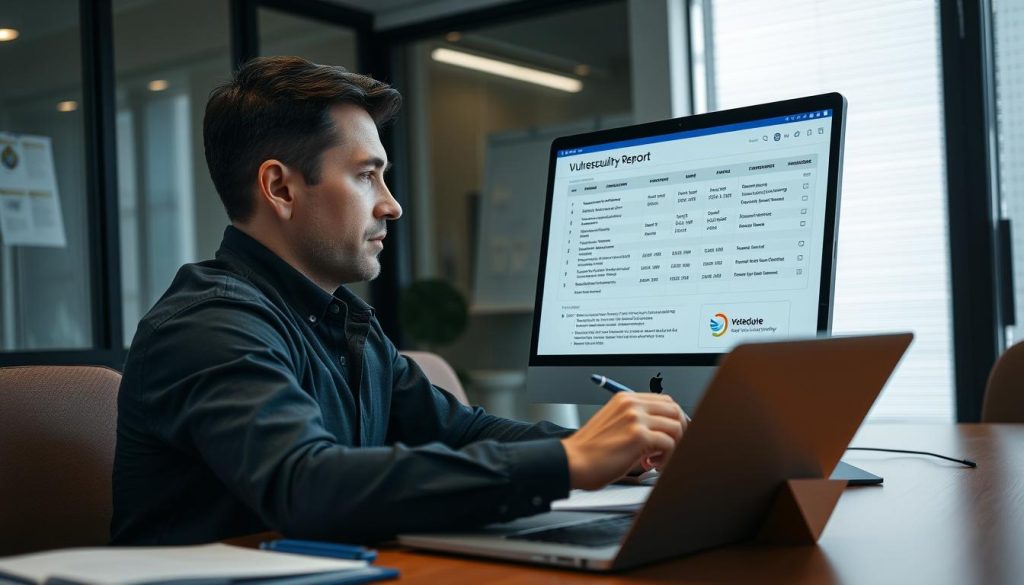
Visualizing Vulnerability Findings Effectively
Strategic visualizations make complex vulnerability data immediately comprehensible. Charts, graphs, and heat maps illustrate priority findings across different technical expertise levels.
We incorporate standardized severity classifications and prioritization rankings in every report. This structure maintains focus on scan-specific findings rather than broader security assessments.
Consistent documentation supports both remediation efforts and compliance requirements. Organizations can demonstrate when scans occurred, what vulnerabilities were discovered, and how they responded.
Well-organized reports transform raw data into actionable intelligence for all stakeholders. This completes the cycle from discovery to informed decision-making.
Integrating Vulnerability Scanning into a Broader Management Strategy
The true power of vulnerability scanning is realized when it becomes a core component of a strategic defense framework. We advocate for integrating these discovery activities into a comprehensive vulnerability management program. This approach transforms raw data into actionable intelligence that strengthens your entire security posture.
Standalone scans provide a snapshot, but integrated management creates a continuous cycle of improvement. It connects discovery directly to risk assessment, remediation planning, and policy enforcement.
Aligning with Risk-Based Vulnerability Management
Risk-Based Vulnerability Management (RBVM) represents a modern evolution in security practices. Unlike traditional methods that often prioritize by severity score alone, RBVM incorporates critical context.
This strategy evaluates threats based on asset criticality, real-world exploitability, and active threat intelligence. It ensures your organization focuses resources on the vulnerabilities that pose the greatest risk to business operations.
Effective RBVM aligns remediation efforts with your unique risk tolerance and strategic objectives. This prioritization protects the systems and assets most vital to your success.
| Management Approach | Primary Focus | Key Advantage |
|---|---|---|
| Traditional | Quantity and severity of flaws | Simple to implement |
| Risk-Based (RBVM) | Business impact and exploitability | Strategic resource allocation |
Ensuring Regulatory Compliance and Best Practices
Regular scanning and detailed documentation are fundamental for compliance with standards like HIPAA, GDPR, and PCI DSS. These activities demonstrate proactive practices to auditors and stakeholders.
We guide organizations in establishing clear vulnerability management policies and roles. Defining responsibilities and realistic timelines creates a sustainable program.
Integrating these best practices into enterprise governance elevates security from a technical task to a strategic capability. This builds organizational resilience and stakeholder confidence.
Establishing Continuous Scanning and Remediation Processes
The most effective security programs recognize that vulnerability management is not a destination but a continuous journey of improvement. We help organizations transition from periodic assessments to integrated operational disciplines that adapt to evolving threats.
Scheduling Regular Scans and Reviews
Network environments constantly change with new applications, users, and configurations. This dynamic landscape demands regular vulnerability scans rather than one-time assessments.
We recommend establishing scan frequencies based on system criticality. Mission-critical assets may require weekly or monthly evaluations. Less sensitive systems can follow quarterly schedules.
Event-driven scanning provides additional protection. Immediate assessments after system patches or security disclosures ensure timely threat identification.
Implementing and Verifying Remediation Efforts
Effective remediation translates scan findings into concrete security improvements. Teams must address critical vulnerabilities through timely patch application or alternative mitigation techniques.
Verification represents the final crucial step. Follow-up scans confirm that remediation efforts successfully resolved identified issues. This validation closes the security loop.
Establishing clear workflows with defined responsibilities ensures consistent remediation over time. This systematic approach transforms vulnerability data into lasting risk reduction.
Conclusion
Every organization, regardless of size or industry, faces the universal imperative of maintaining vigilant security through continuous vulnerability assessment. All networks remain potential targets for malicious actors at any time, making regular scanning an essential part of comprehensive protection.
We emphasize the critical responsibility organizations owe to internal teams and customers. Systematic vulnerability scanning protects sensitive data, critical applications, and valuable business assets from evolving threats. This foundational practice identifies potential weaknesses before they escalate.
Implementing structured vulnerability management represents proactive defense, not mere compliance. Real-world incidents like the MOVEit breach demonstrate why disciplined scanning practices remain indispensable against sophisticated threats and malicious software.
We stand ready to help organizations build resilience through systematic vulnerability identification and remediation. This investment strengthens overall security posture and protects all connected devices across your infrastructure.
FAQ
What is the difference between a vulnerability scan and a penetration test?
A vulnerability scan is an automated process that systematically searches for and identifies known weaknesses, misconfigurations, and outdated software across your network and systems. In contrast, a penetration test is a controlled, simulated cyberattack conducted by security experts who attempt to exploit identified vulnerabilities to determine the potential depth of a real breach. Scanning provides a list of potential issues, while penetration testing demonstrates the business impact of those security issues.
How often should we perform vulnerability scans?
We recommend conducting vulnerability scans on a continuous or very frequent basis (e.g., weekly or monthly) for critical external-facing assets. Internal networks should be scanned at least quarterly. The frequency should be aligned with your organization’s risk appetite, compliance requirements, and the rate of change within your IT environment. New systems should be scanned before deployment, and scans should always follow major network changes.
What are the best practices for prioritizing vulnerabilities for remediation?
Effective prioritization goes beyond just the severity score (like a CVSS score). Best practices involve a risk-based approach that considers the vulnerability’s criticality, the context of the affected asset (e.g., its exposure to the internet and the sensitivity of the data it holds), and the availability of a reliable patch. We help organizations focus remediation efforts on weaknesses that pose the most significant threat to business operations, ensuring efficient use of security resources.
Can vulnerability scanning disrupt our network or applications?
When configured properly by experienced professionals, vulnerability scanning should not cause disruption. However, aggressive scanning can occasionally impact performance on older or more fragile systems. Our process involves careful planning and scanning during maintenance windows or off-peak hours for initial assessments. We use credentialed scans that are less intrusive and provide more accurate data, minimizing any potential impact on your production environment.
How does vulnerability management help with regulatory compliance?
A formalized vulnerability management program is a core requirement of many compliance frameworks, such as PCI DSS, HIPAA, SOC 2, and ISO 27001. These standards mandate regular assessments and timely remediation of security weaknesses. Our scanning and reporting processes provide the necessary documented evidence to demonstrate due diligence and a proactive security posture to auditors, helping you meet and maintain compliance obligations efficiently.
What is the role of asset discovery in the scanning process?
Asset discovery is the critical first step. You cannot secure what you do not know exists. This process involves creating and maintaining an accurate inventory of all hardware, software, and devices connected to your network. Comprehensive asset discovery ensures that scans are complete and that no system is overlooked, providing a true picture of your organization’s attack surface and enabling effective risk management.