
Last year saw over 30,000 new security weaknesses discovered—a 17% surge from the previous year. This alarming growth highlights the critical need for systematic enterprise protection.

We understand how challenging it can be for American businesses to manage these security gaps across complex IT environments. From legacy systems to modern cloud deployments, the landscape grows more complicated daily.
Many organizations struggle with reactive approaches that leave dangerous exposures unaddressed. This guide transforms that chaos into a well-orchestrated, proactive security operation.
Our expertise helps enterprises implement robust systems that prevent security issues from falling through organizational cracks. We focus on integrating people, processes, and technology for comprehensive protection.
This framework addresses the full lifecycle of security gap management. It positions your business to stay ahead of emerging threats rather than reacting to breaches.
Key Takeaways
- Over 30,000 new security weaknesses emerged in 2024 alone
- Systematic management is essential for enterprise protection
- Modern IT environments require comprehensive security approaches
- Proactive strategies outperform reactive security measures
- Integration of people, processes, and technology creates strong defenses
- Effective systems prevent security gaps from being overlooked
- Full lifecycle management provides complete enterprise security
Introduction to Vulnerability Remediation Tracking
With research showing a 71% surge in credential-based attacks, organizations must adopt more structured security practices. This dramatic increase demonstrates how unaddressed security gaps enable attackers to gain access easily. We developed this comprehensive guide to address these pressing challenges.
Overview of the Best Practices Guide
Our guide serves as a specialized resource for enterprise-level security teams. It focuses on transforming security gap management from reactive to proactive approaches. The framework encompasses identification, prioritization, and systematic resolution of exploitable weaknesses.
We integrate timelines, automation, and clearly defined security processes. Regular validation ensures patches remain effective as systems evolve. This methodology emphasizes proactive oversight and systematic follow-through.
| Security Metric | 2023 Data | 2024 Data | Year-over-Year Change |
|---|---|---|---|
| New Security Weaknesses Identified | 25,641 | 30,000 | +17% |
| Credential-Based Attacks | Base Year | Current Data | +71% |
| Enterprise Systems Affected | 58% | 67% | +9% |
Targeting Enterprise-Level Security in the United States
American businesses face unique regulatory and operational challenges. Large organizations require specialized approaches to security management. Our solutions address complex infrastructure protection needs.
We position security gap tracking as critical business continuity protection. It safeguards corporate assets in an increasingly hostile threat landscape. This approach helps organizations maintain robust cyber defense postures.
Enterprises can significantly enhance their overall security stance. Our methodology ensures identified weaknesses cannot be exploited by adversaries. This transforms time-consuming activities into well-organized processes.
Understanding Vulnerability Remediation Tracking
We define this essential practice as the complete lifecycle for handling security gaps. It starts with finding weaknesses and assessing their danger. The method then carefully follows each issue until it is fully resolved and confirmed as fixed.
Definition and Core Concepts
This systematic approach goes far beyond simple discovery. It includes planning patch releases and making sure they work correctly across all affected systems. A core concept is verifying that fixes stay effective as your technology environment continues to change.
Leaving patches unfinished creates serious openings that attackers can use. Our framework emphasizes detailed records and clear accountability. This provides full visibility into the status of fixes across your entire organization.
A disciplined tracking methodology is no longer optional; it’s the backbone of a resilient security posture, turning chaotic responses into predictable outcomes.
We see a clear difference between older, informal methods and modern, structured practices. The table below highlights these key distinctions.
| Aspect | Traditional Approach | Modern Tracking System |
|---|---|---|
| Scope | Reactive to major incidents | Proactive, covering all known issues |
| Visibility | Limited, siloed information | Centralized, unified dashboard view |
| Verification | Often skipped or assumed | Mandatory step with documented proof |
Importance in Modern Cybersecurity
New security gaps appear constantly across the global landscape. Strong oversight methods are critical for managing these risks effectively. They enable teams to maintain a comprehensive view of all known threats.
This proactive management style leads to faster response times and higher compliance rates. It significantly reduces the chance of successful breaches. We position this process as fundamental to moving from reactive firefighting to proactive prevention.
Effective integration with IT operations and development workflows is key. This creates a single, accurate picture of your security health. It empowers your business to stop exploitation before it can even start.
The Importance of Proactive Vulnerability Management
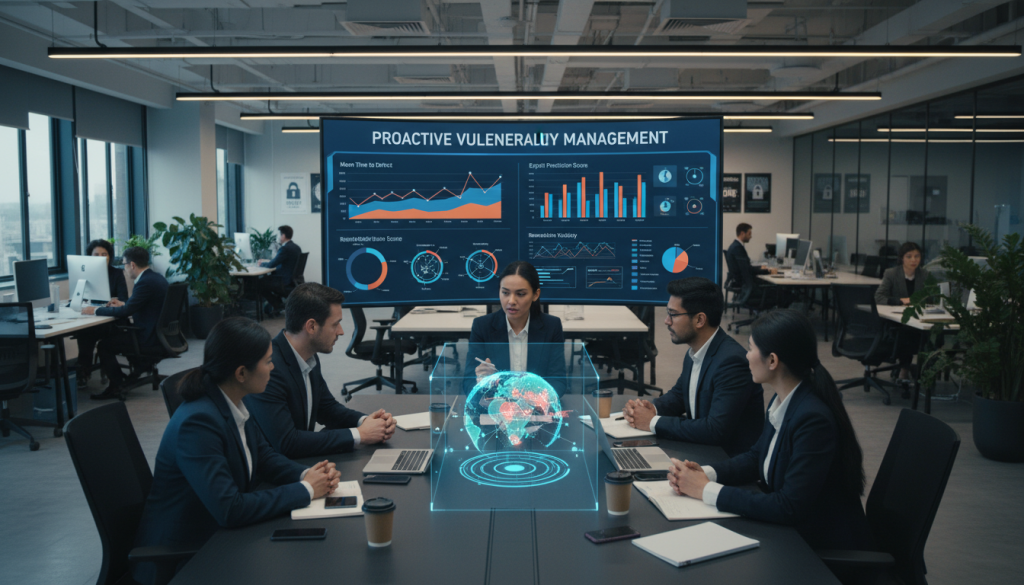
The digital battlefield has evolved dramatically, forcing organizations to adopt a forward-thinking security posture. We champion proactive management as the essential shift from reactive firefighting to strategic risk prevention. This approach stops exploits before attackers can leverage discovered weaknesses.
Reducing Risk and Potential Exploits
The urgency stems from rapidly shrinking timeframes. Sophisticated threat actors now weaponize public advisories within hours rather than days. Maintaining pace with thousands of new annual cases requires documented processes for effective resource prioritization.
Regulatory mandates across healthcare, finance, and manufacturing demand prompt risk addressing with formal documentation. Our approach ensures compliance while preventing costly penalties. Proactive management significantly reduces exploit windows by accelerating patching.
Effective coordination requires cross-functional collaboration between IT, development, QA, and compliance teams. Structured tracking provides the framework for this essential cooperation. It transforms chaotic responses into organized, measurable steps.
Gathering comprehensive information creates valuable organizational knowledge. This reveals patterns and identifies recurring misconfigurations. The proactive model enables strategic resource allocation toward high-priority threats that present genuine business risk.
Key Metrics and Performance Indicators
Quantifiable metrics transform subjective security assessments into objective performance evaluations. We establish specific indicators that measure response speed, resolution quality, and overall program success across enterprise environments.
Time to Detect and Time to Remediate (TTD & TTR)
Time to Detect (TTD) measures the interval between security gap introduction and actual discovery. This provides insight into scanning frequency and detection capability effectiveness.
Time to Remediate (TTR) tracks the complete lifecycle from identification through verified resolution. It serves as a comprehensive indicator of organizational responsiveness and efficiency.
Mean Time to Patch represents a focused subset that specifically measures deployment speed. This captures the efficiency of testing, approval, and distribution workflows.
Measures of Remediation Success
Remediation Success Rate quantifies the percentage of issues effectively resolved on the first attempt. This indicates patch quality and deployment process maturity.
Recurrence Rate identifies how frequently previously resolved problems re-emerge. This highlights gaps in quality assurance and change management.
Compliance readiness measures how consistently organizations meet industry-mandated timelines. This prevents regulatory penalties while maintaining strong security postures.
These metrics collectively provide security leadership with actionable intelligence. They support process optimization, resource allocation, and justification for security investments.
Essential Steps in the Vulnerability Remediation Process
We implement a five-phase approach that ensures comprehensive handling of security findings from detection through closure. This structured methodology transforms complex security challenges into manageable, predictable stages.
Each phase builds upon the previous one, creating a seamless workflow. This prevents critical gaps from being overlooked during resolution.
Discover, Triage, and Assign Ownership
The initial phase combines automated scanning with manual assessment techniques. This comprehensive discovery identifies weaknesses across your technology landscape.
Findings undergo systematic prioritization based on severity and business impact. Critical issues receive immediate attention while lower-risk items follow standard schedules.
Clear ownership assignment prevents confusion about responsibility. Specific individuals or teams receive defined deadlines for resolution tasks.
Testing, Validation, and Deployment
Technical teams develop fixes while maintaining detailed documentation. This includes patch versions, test plans, and dependency information.
Rigorous testing occurs in controlled environments before production deployment. This validation confirms that solutions address security gaps without creating new issues.
Final verification uses scanning tools to confirm successful resolution. Documentation completes the cycle while supporting continuous improvement efforts.
Our methodology treats each step as essential rather than optional. This disciplined approach ensures organizations achieve lasting protection.
Leveraging Tools for Enhanced Vulnerability Management
Purpose-built technology solutions now offer American businesses unprecedented capabilities for orchestrating security improvement activities across distributed systems. We observe that dedicated platforms transform fragmented approaches into cohesive, data-driven processes.
Centralized Visibility and Automated Workflows
Modern tools aggregate findings from multiple scanners into unified interfaces. This eliminates information silos that previously hindered comprehensive oversight.
Automated workflow capabilities represent significant operational advantages. These platforms connect directly to email and project management software. They create tasks automatically when new security issues emerge.

Risk-Based Prioritization and Collaboration
Advanced solutions enable sophisticated prioritization algorithms. They consider severity, exploit probability, and asset criticality. This ensures teams focus on genuinely dangerous exposures first.
Collaboration features allow cross-functional teams to work within the same platform. Security analysts, developers, and system administrators share real-time status information. This prevents duplicate efforts and communication breakdowns.
Historical reporting creates valuable institutional knowledge. Organizations can identify trends and optimize their security improvement processes over time.
Overcoming Challenges in Vulnerability Remediation Tracking
Even the most sophisticated security gap management frameworks encounter operational hurdles that demand strategic solutions. We recognize that practical implementation often reveals unexpected barriers requiring adaptive approaches.
Addressing False Positives and Legacy Infrastructure Issues
Modern scanning tools frequently generate overwhelming volumes of low-risk results. This creates alert fatigue that can obscure genuine threats within security findings. Our approach includes systematic scanner tuning to reduce noise while maintaining comprehensive coverage.
Legacy infrastructure presents significant compatibility challenges with contemporary security systems. Older environments may resist integration with modern scanning plugins, creating invisible gaps in oversight. We develop specialized monitoring strategies for these critical systems.
Organizational resistance to workflow change represents another common barrier. Departments accustomed to informal methods often hesitate to adopt centralized platforms. Our framework includes comprehensive change management training to ease this transition.
Resource constraints remain problematic even with accurate identification of security gaps. Understaffed teams struggle to implement fixes within required timeframes. We advocate for transparent communication with leadership to secure necessary resources.
The absence of structured verification protocols allows security issues to persist despite apparent resolution. This gradually erodes confidence in tracking processes. Our methodology mandates comprehensive post-deployment testing to ensure genuine resolution.
Critical Vulnerability Remediation Timeline: Best Practices for Urgent Fixes
When critical security flaws emerge with active exploits circulating, organizations face their most demanding operational challenge. We establish accelerated timelines that compress standard processes from weeks into hours or days. This approach ensures immediate protection against genuine threats.
Our framework prioritizes rapid response without compromising safety. It balances urgency with thorough validation to prevent operational disruptions.
Immediate Alerting and Temporary Mitigations
Automated notification systems must instantly contact security leadership and technical teams. This ensures appropriate resource mobilization for critical situations.
Preliminary assessment quickly identifies affected asset criticality. Systems with high exposure receive emergency attention while others follow extended schedules.
“Speed and precision become inseparable partners during security emergencies, where every moment counts toward preventing potential breaches.”
Temporary measures provide essential protection when permanent solutions aren’t available. These include service isolation, firewall adjustments, or network segmentation.
Documentation within tracking systems maintains organizational awareness. It prevents confusion when permanent patches become available for deployment.
| Process Phase | Normal Timeline | Critical Situation |
|---|---|---|
| Initial Assessment | 3-5 business days | 2-4 hours |
| Temporary Measures | Not typically used | Immediate implementation |
| Patch Testing | 5-7 days | 24-48 hours |
| Production Deployment | Scheduled maintenance window | Emergency change approval |
Dedicated teams work continuously until resolution for genuinely critical situations. This structured approach establishes clear hourly milestones from discovery through verification.
Pre-established response protocols define roles and communication channels. Teams execute efficiently without coordination delays during actual emergencies.
Real-World Examples and Practical Applications
Real-world security operations showcase the tangible benefits of entity-level oversight in complex infrastructure environments. We observe how granular control mechanisms enable precise security management across diverse technology landscapes.
These practical implementations demonstrate how organizations achieve targeted security oversight for specific components. The approach provides operational advantages in distributed systems management.
Case Studies on Process Groups and Kubernetes Nodes
Process group monitoring exemplifies practical security applications where businesses track individual entities affected by third-party security issues. Organizations maintain granular control over which specific process groups, processes, or Kubernetes nodes require active oversight.
Muting functionality allows security teams to exclude irrelevant findings without dismissing underlying security concerns across all systems. This capability handles false positives effectively while maintaining comprehensive protection.
Practical filtering options demonstrate real-world utility, enabling searches by entity names, status indicators, and risk assessments. Teams access comprehensive information including affected process counts and security status indicators.
Detailed views provide in-depth data including component origins, status change histories, and multi-dimensional risk evaluations. Similar capabilities extend to individual processes and Kubernetes nodes, ensuring consistent approaches across heterogeneous environments.
These real-world applications illustrate the value of granular security management through effective remediation tracking methodologies. Organizations can manage security concerns across complex distributed environments with thousands of individual entities.
Conclusion
The journey toward comprehensive security protection requires a fundamental shift in organizational mindset and processes. We’ve demonstrated how structured approaches transform chaotic responses into measurable security improvements.
Effective vulnerability remediation tracking represents more than technical capability—it embodies a cultural commitment to security excellence. Our framework integrates people, processes, and technology to create resilient defenses.
Organizations that embrace these best practices gain competitive advantages through enhanced protection and compliance. The path forward involves continuous refinement of security solutions and organizational capabilities.
We position this methodology as essential for long-term business success in an evolving threat landscape. True security maturity comes from systematic approaches that withstand emerging challenges.
FAQ
What is the primary goal of vulnerability remediation tracking?
The main objective is to systematically manage and resolve security weaknesses within an organization’s systems. This process ensures that identified flaws are properly addressed, verified, and closed, thereby reducing the overall risk posture and maintaining compliance with industry standards.
How does effective tracking improve an organization’s security posture?
It provides clear visibility into the security management lifecycle, from discovery to resolution. By monitoring key performance indicators like Time to Remediate (TTR), teams can accelerate their response to threats, minimize potential exploits, and demonstrate continuous improvement in their cybersecurity defenses.
What are the biggest challenges in managing this process for large enterprises?
Enterprises often struggle with the scale of data, dealing with false positives, and integrating processes across complex environments like cloud infrastructure and Kubernetes clusters. A centralized tool with automation capabilities is essential for overcoming these hurdles and ensuring consistent application of security policies.
Why is risk-based prioritization critical in remediation efforts?
Not all security findings carry the same level of business risk. Prioritization allows teams to focus resources on addressing the most critical vulnerabilities first, such as those in public-facing applications, which directly protects the organization from the most severe potential threats and data breaches.
Can automation truly enhance vulnerability management?
Absolutely. Automation streamlines workflows by automatically assigning ownership, triggering alerts for critical issues, and facilitating deployment after testing. This reduces manual effort, decreases the window of exposure, and allows security professionals to concentrate on strategic analysis rather than administrative tasks.
How do tools like Splunk or Qualys help with remediation tracking?
These solutions offer centralized platforms that aggregate findings from various scanners and testing tools. They provide dashboards for visibility, collaboration features for development and operations teams, and reporting capabilities that are vital for demonstrating compliance and measuring the success of security initiatives over time.