In 2023, over 95% of all ransomware attacks leveraged the Remote Desktop Protocol as their primary entry point. This staggering statistic highlights a critical security challenge facing modern businesses. As organizations increasingly rely on remote access solutions, the attack surface has expanded dramatically.
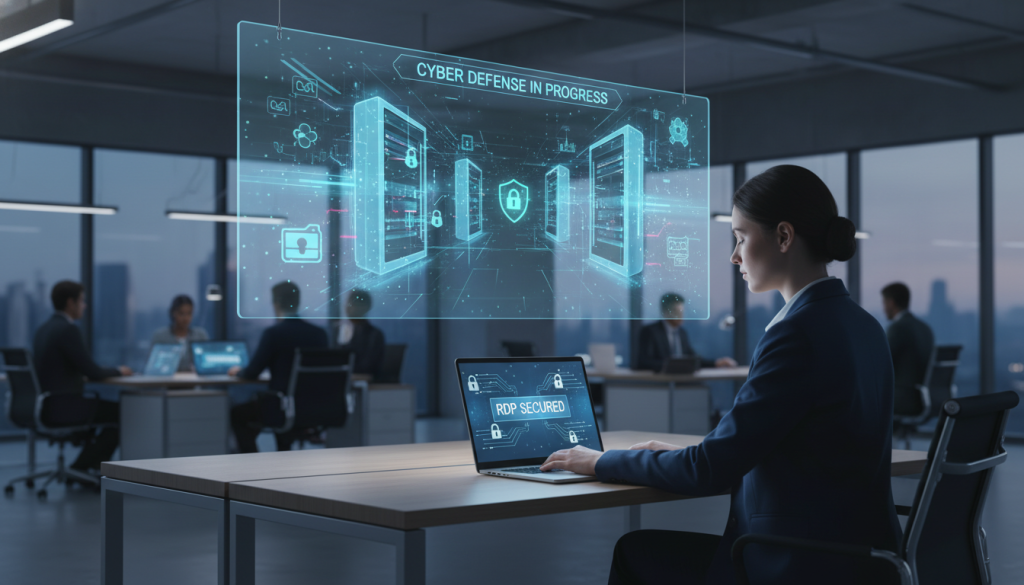
We understand that maintaining business continuity in today’s hybrid work environments depends on secure remote connections. The very tools that empower productivity can become significant liabilities without proper protection. Our expertise focuses on transforming these potential weaknesses into fortified assets.
Many companies overlook the fundamental security configurations needed for safe remote desktop usage. This creates openings that cybercriminals actively exploit. We provide the comprehensive approach necessary to close these gaps effectively.
Addressing these exposure points requires more than basic settings adjustments. It demands a strategic partnership with cybersecurity specialists who understand both the technology and the evolving threat landscape. We bring that essential perspective to every engagement.
Key Takeaways
- RDP serves as the primary entry point for the vast majority of ransomware incidents.
- Remote work expansion has significantly increased organizational attack surfaces.
- Proper configuration is fundamental to securing remote access tools.
- Cybersecurity expertise is crucial for identifying and mitigating hidden risks.
- A proactive security strategy transforms potential vulnerabilities into protected assets.
- Business continuity in distributed teams depends on reliable and secure connections.
Understanding the RDP Security Landscape
As organizations increasingly rely on distributed teams, the technology facilitating remote connections demands careful security consideration. We approach this landscape with comprehensive understanding of both the technical foundations and potential exposure points.
Remote Desktop Protocol Overview
Microsoft’s Remote Desktop Protocol enables graphical remote access across diverse operating systems. This technology allows users to control another computer as if they were sitting directly in front of it.
The protocol operates primarily on TCP port 3389, creating a standardized communication channel. It supports various authentication methods, from traditional credentials to advanced biometric options.

Built-in encryption ensures secure data transmission during remote sessions. The architecture uses data streams with different security modes for flexible protection levels.
Exploring Common RDP Exploits and Vulnerabilities
Attackers frequently target the default port and weak authentication configurations. These openings can lead to unauthorized network access and potential data exposure.
We identify several common attack vectors that exploit protocol weaknesses. Proper configuration and monitoring significantly reduce these security risks.
Understanding these potential issues helps organizations implement effective protective measures. Our expertise focuses on transforming these technical challenges into secured assets.
Practical Steps to Mitigate rdp vulnerability
Organizations can significantly reduce their exposure by implementing practical security measures across authentication, network configuration, and maintenance protocols. We help businesses establish layered defenses that address the most critical areas of concern.
Implementing Strong Authentication and Network Level Authentication
Robust identity verification forms the first line of defense. We guide clients through implementing multifactor authentication (MFA) that requires both knowledge-based and possession-based factors.
This approach mandates complex passwords alongside time-based codes from authenticator apps. Network Level Authentication adds another critical layer by validating credentials before establishing full sessions.
Configuring Firewall Rules, VPNs, and Non-Standard Ports
Proper network segmentation controls access points effectively. We recommend restricting connections through specific firewall rules and virtual private networks.
Moving services away from default ports like 3389 reduces automated scanning attempts. These configurations create additional barriers that deter potential intruders.
Regular Patching, Monitoring, and Account Lockout Policies
Consistent maintenance prevents exploitation of known weaknesses. We establish automated patch management systems that keep all components current.
Continuous monitoring detects unusual activity patterns early. Account lockout policies after multiple failed attempts block brute force attacks effectively.
These practical measures work together to create comprehensive protection for remote access systems. Each layer addresses specific risks while supporting overall security posture.
Leveraging Tools and Strategies for Enhanced Cybersecurity
We deploy multi-layered security frameworks that integrate cutting-edge technologies with proven protection methodologies. Our approach extends beyond basic hardening to address sophisticated threats targeting modern business environments.
Using Fastly's Next-Gen WAF and DDoS Protection
Fastly’s comprehensive security platform provides enterprise-grade protection for remote access infrastructure. The Next-Gen Web Application Firewall blocks malicious traffic targeting critical services.
DDoS mitigation ensures continuous operation during volumetric attacks. Edge cloud security processes connection requests closer to users with encrypted TLS connections.
Deploying Zero Trust, SASE, and ASM Solutions
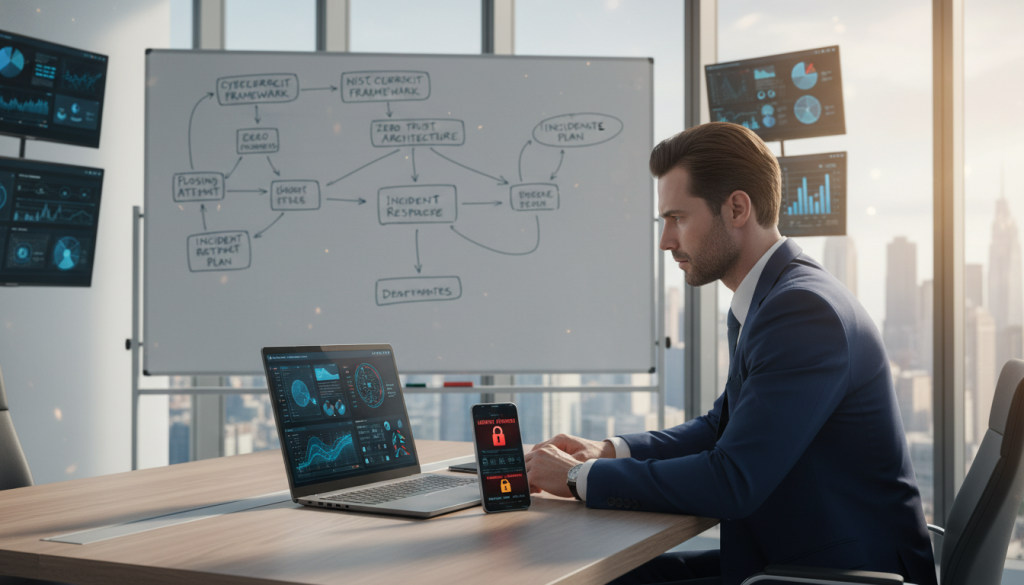
We implement Zero Trust frameworks that validate every access attempt. Secure Access Service Edge (SASE) architectures combine network security with wide-area networking.
Attack Surface Management (ASM) solutions continuously monitor for exposure points. These integrated approaches create robust defenses against evolving threats.
Securing RDWeb, RDGateway, and Other Remote Access Services
Our expertise extends to protecting specialized remote desktop components. We harden RDWeb and RDGateway configurations with advanced security measures.
Real-time monitoring and logging track suspicious activity across all sessions. This comprehensive management ensures secure connections for authorized users.
Conclusion
Effective defense against remote desktop threats involves integrating complementary security measures rather than relying on isolated solutions. We build comprehensive protection frameworks that address the complete spectrum of potential risks facing modern organizations.
Our approach combines robust technical controls with continuous monitoring and user education. This multi-layered strategy ensures that remote access systems remain secure against evolving attack methods.
By partnering with us, organizations gain proactive protection for their critical infrastructure. We transform potential security challenges into fortified assets that support business continuity in today’s distributed work environments.
Together, we create resilient remote access solutions that protect your information while enabling productive connections for authorized users. This collaborative approach represents the future of effective cybersecurity service delivery.
FAQ
What is the primary security risk associated with using Remote Desktop Protocol?
The main risk is that it provides a direct pathway for attackers if not properly secured. Cybercriminals often scan the internet for systems with port 3389 open to launch brute-force attacks, credential theft, and malware deployment, potentially leading to significant data breaches.
How can we secure our remote access services beyond just changing the default port?
Beyond using a non-standard port, we recommend implementing multi-factor authentication (MFA), enforcing Network Level Authentication (NLA), and deploying a Virtual Private Network (VPN) or a Remote Desktop Gateway. These layers significantly reduce the attack surface by hiding the service and requiring robust verification before granting access.
What role does a Web Application Firewall play in protecting remote desktop environments?
A next-generation Web Application Firewall (WAF), like the one offered by Fastly, is crucial for protecting public-facing components like RDWeb. It filters and monitors HTTP traffic to block malicious requests, SQL injection, and other application-layer attacks that could compromise your remote access infrastructure.
Why is account lockout policy important for mitigating brute-force attacks?
A strict account lockout policy automatically temporarily disables an account after a set number of failed login attempts. This effectively thwarts automated brute-force attacks by slowing down or stopping attackers from endlessly guessing passwords, protecting user credentials and preventing unauthorized entry.
How do Zero Trust and SASE frameworks enhance security for remote work?
Zero Trust and Secure Access Service Edge (SASE) models operate on the principle of “never trust, always verify.” They ensure that every access request is authenticated, authorized, and encrypted, regardless of the user’s location. This minimizes risks by granting least-privilege access and continuously validating security posture, which is vital for protecting distributed workforces.