
Did you know that organizations typically take over 200 days to detect a security breach? This alarming statistic from IBM research reveals a critical gap in modern cybersecurity defenses. Many businesses remain unaware of vulnerabilities until attackers have already exploited them.
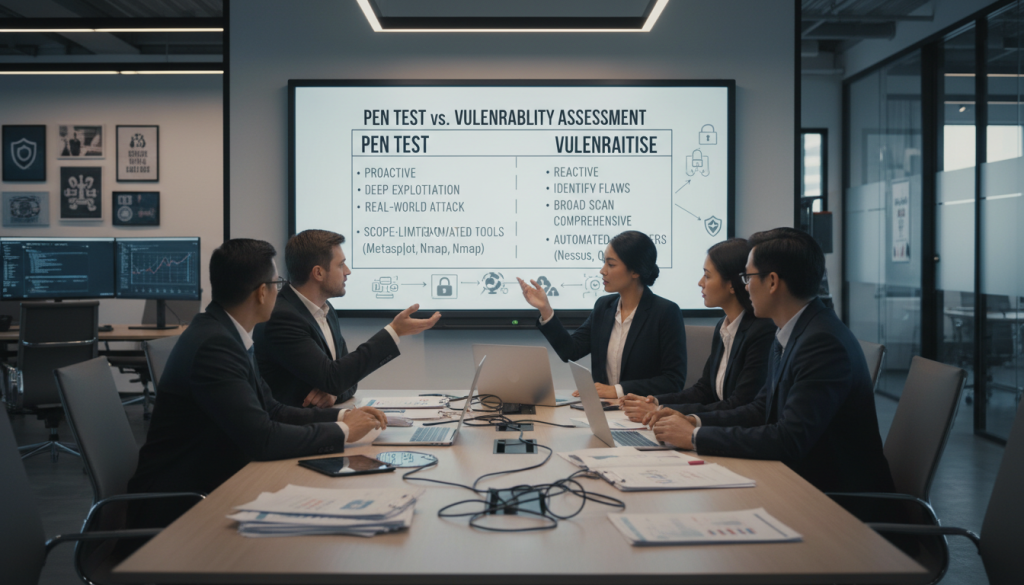
We help organizations navigate this complex landscape by clarifying two essential security methodologies. One approach identifies potential weaknesses through comprehensive scanning. The other simulates real-world attacks to test defensive measures.
These complementary strategies form the foundation of proactive protection. Understanding when and how to deploy each method can significantly reduce your risk exposure. Proper implementation transforms reactive security into a strategic advantage.
As trusted cybersecurity advisors, we guide businesses in selecting the right approach based on their unique risk profiles. This comprehensive analysis explores methodologies, benefits, and implementation strategies for building resilient security programs.
Key Takeaways
- Organizations average over 200 days to detect security breaches
- Two distinct methodologies serve complementary security roles
- One approach identifies weaknesses through systematic scanning
- The other tests defenses through simulated real-world attacks
- Proper implementation reduces risk exposure significantly
- These methods form a layered security program foundation
- Strategic selection depends on organizational risk profiles
Introduction to Cybersecurity Testing
Cybersecurity testing represents a fundamental pillar in protecting organizational assets from evolving digital threats. Many businesses struggle to maintain adequate security programs due to resource constraints. This gap often leaves systems exposed to potential exploitation.
Purpose and Importance of Security Testing
We help organizations understand that security testing proactively identifies weaknesses before malicious actors can exploit them. This approach prevents financial losses, data theft, and operational disruptions. Regular evaluation forms the cornerstone of modern protection strategies.
Resource limitations challenge many businesses trying to keep pace with emerging threats. Strategic planning and external expertise often become necessary for comprehensive coverage. Unaddressed vulnerabilities create opportunities for cybercriminals seeking network access.
Overview of Testing Strategies in Cybersecurity
Modern cybersecurity employs a spectrum of testing methodologies ranging from automated scanning to manual examination. Each approach serves distinct purposes within an overall security framework. Effective testing enables informed decisions about resource allocation and remediation priorities.
Security evaluation represents an ongoing process rather than a one-time activity. Infrastructure changes and expanding attack surfaces require continuous adaptation. We provide guidance on implementing strategies that balance thoroughness with operational efficiency.
| Testing Approach | Primary Focus | Frequency | Resource Requirements |
|---|---|---|---|
| Automated Scanning | Systematic vulnerability detection | Weekly/Monthly | Moderate technical resources |
| Manual Examination | In-depth system analysis | Quarterly/Annually | Significant expertise required |
| Continuous Monitoring | Real-time threat detection | Ongoing | Advanced security infrastructure |
As trusted partners, we understand these complex challenges. Our guidance helps organizations implement testing strategies that demonstrate due diligence to stakeholders while maintaining budget constraints.
Understanding Penetration Testing
Unlike automated scanning methods, penetration testing employs human expertise to replicate sophisticated attack scenarios. This approach provides definitive validation of your security posture against genuine threats.
Definition and Hands-On Approach
We define penetration testing as a comprehensive security evaluation conducted by skilled ethical hackers. These professionals simulate real adversary behavior using the same tools and techniques as malicious actors.
Every penetration test requires management approval before commencement. This ensures proper scoping and prevents potential disruption to business operations.
Benefits and Real-World Simulations
The primary benefit of penetration testing lies in verifying whether vulnerabilities can actually be exploited. This moves beyond theoretical risk to demonstrate real exploitability.
These simulations uncover complex multi-stage attack paths that automated tools might miss. They validate security control effectiveness and provide prioritization guidance based on actual exploitation potential.
We help organizations understand that this hands-on approach reveals deep infrastructure issues. It offers the security equivalent of a detailed MRI scan compared to surface-level views.
Exploring Vulnerability Assessments
Automated detection methods offer a foundational layer of protection by continuously monitoring for security gaps. These systematic evaluations provide comprehensive visibility into your digital infrastructure’s exposure points.

Automated Scanning Techniques
We implement advanced scanning technology that authenticates to each host system for thorough internal examination. This credentialed approach reveals configuration issues and missing patches that external scans might miss.
Modern scanning solutions can detect over 50,000 known security flaws across networks and applications. These tools leverage continuously updated databases incorporating newly discovered weaknesses.
| Scan Type | Authentication | Depth | Detection Capability |
|---|---|---|---|
| Credentialed Scan | Full system access | Deep internal | Configuration flaws, missing patches |
| Non-Credentialed Scan | External only | Surface level | Network vulnerabilities |
| Continuous Monitoring | Real-time access | Ongoing assessment | Emerging threats |
Scope and Frequency of Assessments
Comprehensive scanning should cover all network-accessible assets including servers and databases. This ensures no systems are overlooked in your security evaluation.
These examinations complete in minutes to hours depending on infrastructure size. They can be scheduled for weekly or monthly intervals to maintain continuous protection.
Regular security scanning represents the first line of defense in modern cybersecurity programs.
The cost-effectiveness at approximately $100 per IP annually makes these scans accessible for organizations of all sizes. Compliance frameworks like PCI DSS mandate periodic evaluations by approved vendors.
Deep Dive: pen test vs vulnerability assessment
Security methodologies differ fundamentally in their operational execution and strategic objectives. We help organizations understand how each approach serves unique purposes within comprehensive protection strategies.
Comparative Methodologies
Automated scanning systematically identifies potential weaknesses across entire infrastructures. This approach provides broad coverage through software-driven analysis.
Manual examination employs human expertise to simulate real adversary behavior. Security professionals attempt actual exploitation during these detailed evaluations.
| Methodology | Execution | Coverage | Outcome |
|---|---|---|---|
| Automated Scanning | Software-driven analysis | Broad infrastructure coverage | Identified potential weaknesses |
| Manual Examination | Expert-driven simulation | Deep system analysis | Confirmed exploitation paths |
The critical distinction lies in moving from identification to validation. One methodology catalogs what could be exploited while the other demonstrates actual risk.
We recommend implementing both approaches for layered protection. Regular scanning maintains continuous monitoring while periodic deep examinations validate critical systems.
Real-World Impact on Security Posture
The effectiveness of your cybersecurity program directly impacts your ability to protect critical business assets. We help organizations understand how different evaluation methods contribute unique insights that collectively strengthen defensive capabilities.
Identifying Potential Security Gaps
Automated scanning provides broad visibility across your entire infrastructure. This approach identifies potential weaknesses that require immediate attention based on severity and asset criticality.
Manual examination reveals how attackers could chain multiple issues together. It demonstrates precise exploitation paths that could compromise critical systems or access sensitive information.
Balancing Quick Scans with Detailed Examinations
Think of automated scanning as a medical X-ray that identifies obvious structural issues. Manual examination serves as a detailed MRI revealing complex, interconnected problems.
We help organizations achieve strategic balance between frequent scans and periodic deep examinations. This approach maintains continuous visibility while validating defenses against sophisticated attack scenarios.
Both methodologies reveal critical connections between network components and data repositories. These insights help security teams understand how compromising one system could provide pathways to valuable assets.
Our advisory role involves interpreting technical findings in business context. We translate results into actionable improvements that measurably reduce risk and strengthen your defensive posture.
Integrating Testing into Vulnerability Management
Effective security programs require systematic integration of evaluation methods into ongoing protection strategies. We help organizations transition from isolated security checks to comprehensive protection frameworks.

Traditional quarterly scanning and annual examinations no longer provide adequate protection. Modern threat landscapes demand continuous visibility into emerging risks.
Continuous Monitoring and Risk Prioritization
We implement advanced vulnerability management platforms that unify results from multiple sources. These systems provide real-time risk dashboards for informed decision-making.
Continuous monitoring detects configuration drift and new threats as they emerge. This approach maintains constant security awareness without overwhelming internal teams.
Our management methodology focuses resources on critical issues requiring immediate attention. We establish systematic workflows for efficient remediation and validation.
Advanced tools enrich automated data with exploitation insights from manual examinations. This integration helps distinguish theoretical weaknesses from genuine business risks.
The complete process demonstrates continuous security improvement to leadership and auditors. We establish metrics that track progress and validate defensive enhancements.
Analyzing Reports and Remediation Strategies
The true value of security evaluations emerges not during scanning but when analyzing findings and implementing corrective actions. We help organizations translate technical data into strategic improvements that measurably reduce risk.
Understanding these documents is crucial for effective security management. They provide the roadmap for strengthening your defenses.
Penetration Test Reports and Exploitation Insights
These documents deliver a narrative of the security examination. They demonstrate exactly how a skilled attacker could breach your systems.
The report includes step-by-step exploitation paths, proof-of-concept code, and potential business impact. This insight helps prioritize fixes based on genuine exploitability rather than theoretical severity.
Vulnerability Assessment Reports and Actionable Recommendations
This type of document provides a systematic inventory of potential weaknesses. It categorizes findings by severity and offers specific remediation guidance.
These reports are essential for maintaining continuous security awareness. They help teams efficiently address a large volume of potential issues. Our comprehensive guide to vulnerability testing vs penetration offers further clarification on their distinct roles.
| Report Feature | Penetration Test Report | Vulnerability Assessment Report |
|---|---|---|
| Primary Focus | Exploitation demonstration and attack paths | Comprehensive vulnerability inventory |
| Content Depth | Detailed methodology and business impact | Severity ratings and patch recommendations |
| Remediation Guidance | Prioritized based on actual exploitability | Systematic listing for all discovered issues |
Effective remediation requires assigning ownership and tracking progress. This process ensures vulnerabilities are properly addressed and validated.
We establish metrics that demonstrate continuous security improvement to stakeholders. This approach transforms findings into lasting protection.
Choosing the Right Strategy for Your Organization
Selecting the appropriate security evaluation methodology requires careful consideration of multiple organizational factors. We help businesses navigate this decision by analyzing their unique risk profile, compliance needs, and resource availability.
The ideal approach balances thorough protection with operational feasibility. Different sizes and types of organizations benefit from tailored security programs.
Cost, Compliance, and Benefits
Financial investment varies significantly between security approaches. Automated scanning offers an affordable starting point for continuous monitoring.
Manual security examinations provide deeper validation but require greater budget allocation. Regulatory frameworks often mandate specific evaluation frequencies and methodologies.
Each method delivers distinct advantages for protecting digital assets. Comprehensive programs typically integrate both approaches for layered defense.
| Business Size | Primary Focus | Recommended Frequency | Key Drivers |
|---|---|---|---|
| Small Business | Critical asset protection | Monthly scanning + Annual examination | Budget, essential compliance |
| Mid-Sized Organization | Network-wide coverage | Quarterly scanning + Rotating examinations | Regulatory requirements, risk management |
| Large Enterprise | Comprehensive program | Continuous scanning + Bi-annual examination | Stakeholder assurance, complex infrastructure |
Guidance for Various Business Sizes and Needs
Smaller organizations should prioritize regular scanning of critical systems and customer-facing applications. This establishes a foundational security posture within budget constraints.
Mid-sized companies benefit from expanding coverage across all networks while incorporating periodic deep-dive examinations. This approach addresses both breadth and depth of protection.
Large enterprises require integrated programs with continuous monitoring and regular validation exercises. This comprehensive strategy manages complex infrastructure effectively.
We emphasize that these methodologies work together synergistically rather than representing mutually exclusive choices. The combination provides both continuous visibility and periodic validation.
Conclusion
Building a resilient cybersecurity framework requires understanding how different security methodologies complement each other. Automated scanning provides broad visibility across your infrastructure, while manual validation confirms actual exploitability. These approaches serve distinct but equally vital roles in comprehensive protection.
We help organizations integrate both methodologies for optimal security posture. Regular scanning maintains continuous monitoring, while periodic deep examinations validate defenses against sophisticated threats. This strategic combination prioritizes remediation based on genuine business risk.
The evolving threat landscape demands proactive security strategies. We guide businesses in implementing effective testing processes that protect critical networks and data assets. Partnering with experienced professionals ensures lasting security improvement and business continuity.
FAQ
What is the primary goal of a penetration test versus a vulnerability assessment?
The main goal of a penetration test is to simulate a real-world attack by exploiting weaknesses to understand the potential impact on your systems and data. In contrast, a vulnerability assessment focuses on identifying and cataloging potential security gaps within your network and applications through automated scanning. The former provides deep exploitation insights, while the latter offers a broad overview of security flaws for management.
How often should an organization conduct these security evaluations?
We recommend conducting vulnerability scans frequently, such as quarterly or even monthly, due to their automated nature and lower cost. A full penetration test is typically performed annually or after major system changes, as it is a more resource-intensive, hands-on examination. The frequency should align with your organization’s risk profile and compliance requirements.
Which approach is better for meeting compliance standards like PCI DSS or HIPAA?
Both are often required, but they serve different compliance needs. Vulnerability assessments are excellent for continuous monitoring and demonstrating ongoing diligence in identifying weaknesses. Penetration testing is crucial for validating the effectiveness of your security controls against actual attack scenarios. Most frameworks mandate both to ensure a comprehensive security posture.
Can vulnerability scanning tools replace the need for a penetration test?
No, they cannot. Scanning tools are vital for efficiently finding potential vulnerabilities across a wide range of assets. However, they lack the human expertise to simulate sophisticated attacks, understand business logic flaws, or determine the real-world risk of a discovered weakness. A penetration test provides the context and exploitation insights that automated tools miss.
What kind of report can I expect from each service?
A vulnerability assessment report delivers a prioritized list of findings, often with CVSS scores, offering actionable recommendations for remediation. A penetration test report is more narrative, detailing the specific steps an attacker took to breach your defenses, the data accessed, and strategic recommendations to strengthen your security against similar real-world attacks.
How do we decide which security testing strategy is right for our business?
The choice depends on your specific objectives, budget, and risk tolerance. For a continuous, broad view of security gaps, vulnerability assessments are essential. If you need to test your defenses against an active attacker and understand the business impact of a breach, a penetration test is critical. Most organizations benefit from integrating both into a layered vulnerability management program.